Common misunderstandings?
Fear of weight gain is common among women, but building significant muscle mass requires years of dedicated training and a specialized diet. If it were that easy, every man who lifted weights would look like a bodybuilder. It’s important to understand that muscle growth is proportional to existing muscle mass. [1] Because women naturally have less muscle mass than men, the overall gain is significantly lower, even though they build muscle at a similar percentage rate. This means that women can lift weights and still achieve a lean, toned physique without the side effects.
Why is strength training important?
As mentioned above, many women avoid the weight room at the gym and opt for cardio machines instead. Even those who do strength training often prefer group classes like yoga, Pilates, or studio training. While these activities are good for overall health, they don’t offer the same muscle-building and strength-increasing benefits as traditional strength training, especially when it comes to effectiveness and long-term results.
1. Build muscle strength: Strength training sculpts the body and improves functional strength, making everyday activities easier and safer. According to a study conducted in Medicine and Science in Sports and Exercise, women who regularly strength-trained increased their muscle strength by 30 to 50 percent over a period of several months.[2] This improvement is reflected in practical benefits: exercises that strengthen your legs and glutes, making tasks like climbing stairs or lifting heavy objects easier, while Strengthen your lower back and core muscles so you can carry heavy bags or shop more safely and efficiently.
2. Increase metabolismMuscle mass is highly metabolically active, meaning it burns more calories, even at rest. Your body burns 6–7 calories for every pound of muscle mass you gain daily. While this may seem small, the cumulative effect can contribute significantly to weight management and long-term weight loss. In addition, more muscle mass is associated with a lower risk of chronic disease and lower overall mortality. .
3. Improving bone density: The benefits of strength training go far beyond aesthetics. It’s crucial for bone health, especially as we age. According to the National Osteoporosis Foundation, one in two women over 50 will suffer a bone fracture due to osteoporosis. Strength training helps reduce this risk by increasing bone density.
4.Mental healthStrength training is a powerful mood enhancer. A meta-analysis published in JAMA PsychiatryStudies have shown that strength training is associated with a significant reduction in depressive symptoms.[1] Additionally, women who lift weights often experience increased self-confidence and greater self-determination.
Strength training plan for beginners?
It’s time to dispel the myths and acknowledge strength training as an effective workout for both body and mind. So, do women need different workout routines than men? The short answer is no. Women can and should train like men – with exercises that target all major muscle groups. A balanced and effective workout program doesn’t have to be tailored to suit each gender; the principles of strength training apply equally.
Since this guide is specifically designed for beginners, we’ll focus on full-body workouts that build a solid foundation. These routines ensure that every muscle group is trained evenly, resulting in balanced strength and a lower risk of injury. With these effective and safe workout routines, you can confidently begin your strength training journey.
A full-body strength training program?
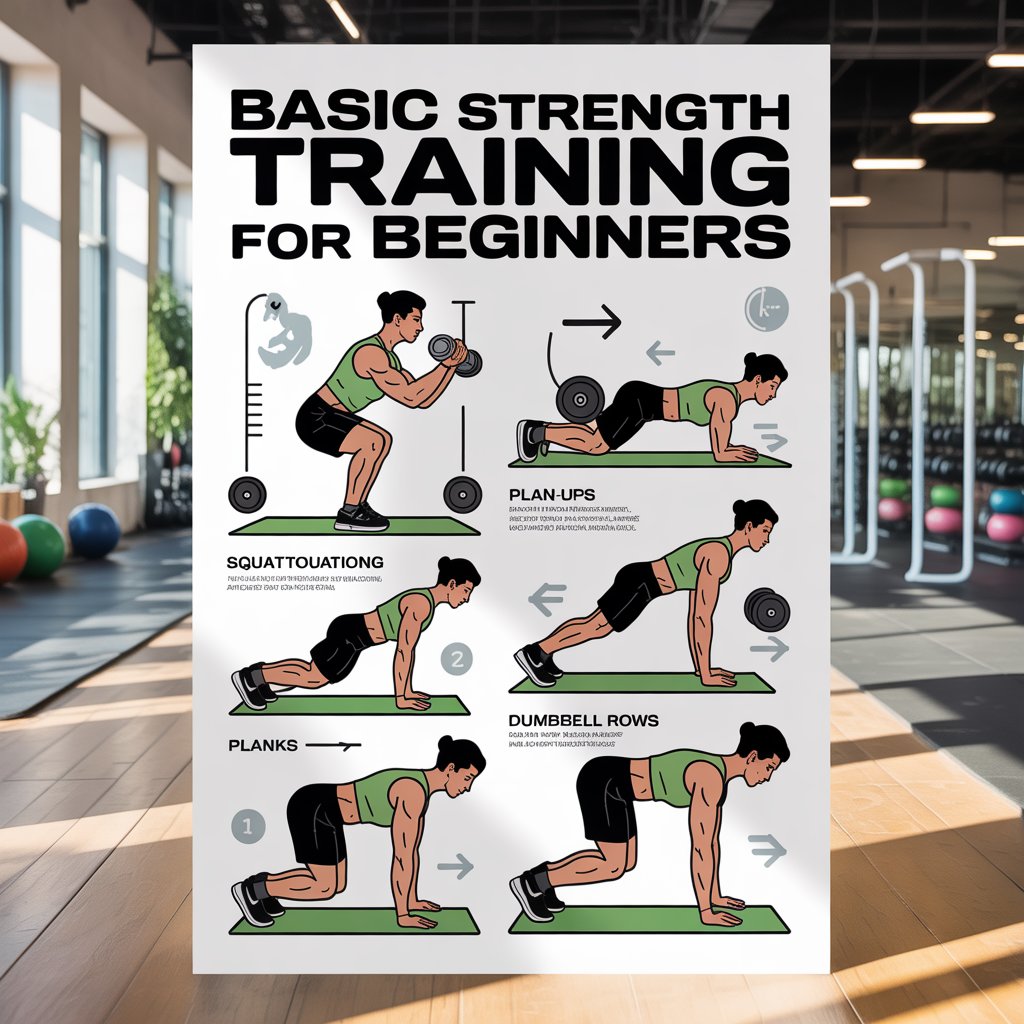
·Type of educationFull-body workout: Each workout targets all muscle groups. This method promotes balanced strength and helps build a strong foundation.
·Training frequency–3 sessions per week. The program is flexible, allowing you to adjust the number of workouts to your schedule and still see progress.
·Training duration60 minutes. Start each session with a warm-up with lighter weights and gradually increase the weight until you reach your goal weight.
Why is strength training important for women?
Strength training is one of the most effective ways for women to build muscle mass, increase metabolism, and improve physical and mental well-being. It offers benefits at all ages and stages of life.
We understand that some women feel more comfortable with activities like yoga, HIIT, Pilates, etc. These activities are primarily included in their guide, the so-called beginner training plan. While these activities are good for overall health, they do not provide the same muscle and strength-building benefits as traditional strength training, especially when it comes to effectiveness and long-term results.
Relaxation for the heart?
As we all know, stress contributes to high blood pressure without us even realizing it. During stress, our bodies produce cortisol and adrenaline, which constrict blood vessels and increase heart rate. Over time, this puts additional strain on the cardiovascular system.
Some studies show that just 10 minutes of mindful breathing or meditation a day can lower blood pressure by reducing stress hormone levels. Yoga and relaxation techniques also improve flexibility, calm the nervous system, and promote recovery after exercise.
At our gyms, you’ll often see members unwinding with stretching exercises, yoga poses, or simple breathing exercises. We know that exercise isn’t just about building muscle; it’s also about building resilience in both body and mind.
Why Anytime Fitness?
Exercise is a personal matter, just like your health journey. At our Anytime Fitness studios, we value confidence, not gimmicks. Join a community that cares about your goals, your progress, and your long-term well-being. Whether you want to lose weight, build strength, or regulate your blood pressure naturally, our team will support you every step of the way.
Smart decisions for a stronger immune system?
Every day, our bodies fight a battle we can’t even see. As soon as we wake up, our immune system searches for hidden threats like viruses, bacteria, or anything else that doesn’t belong in the human body. Think of your immune system as an army that never sleeps: your white blood cells are your soldiers, your antibodies are your weapons, and your lymph nodes are your command centers that send out alarms. If this army is well-trained and fed, it can eliminate invaders before we even notice them. But if it’s tired, malnourished, or stressed, even a mild cold can feel like a war. So what can we do to prevent this? We have the power to strengthen this army every day through simple, natural habits, and yes, exercise plays a big role in that, too.
Use or lose?
If you have a chronic illness or are over 40 and have not been active recently, consult your doctor before starting any strength training or aerobic fitness program.
Before you start strength training, you should warm up for five to ten minutes with brisk walking or other aerobic activity. Cold muscles are more susceptible to injury than warm muscles.
Choose a weight or resistance that is high enough to fatigue your muscles after about 12 to 15 repetitions. Once you can easily repeat a particular exercise more often, gradually increase the weight or resistance.
Studies show that one set of 12 to 15 repetitions with the right weight can effectively build muscle mass for most people and can be just as effective as three sets of the same exercise. As long as you train the muscle to failure—meaning you can’t do another repetition—you’re doing the work necessary to strengthen it. And failure at a higher rep range likely means you’re using a lighter weight, making it easier to control and maintain proper form.
To give your muscles time to recover, it’s best to take a full day of rest between workouts for each muscle group.
Also, listen carefully to your body. If a strength training session causes pain, stop the exercise. Try a lighter weight or try again in a few days.
Proper strength training technique is important for preventing injuries. If you are new to strength training, learn proper form and technique from a trainer or other fitness professional. Remember to breathe when you are strength training.
What is strength training?
Strength training – also known as resistance training – is exactly what the name suggests. Strength training involves performing a limited number of repetitions (or repetitions of a specific exercise before rest) to build muscle mass and physical strength. You use weights, kettlebells, dumbbells, and resistance bands, or your own body weight, such as in push-ups or pull-ups.
How does strength training differ from weightlifting and weight training?
Strength training is a general term that usually involves using heavier weights to build muscle, while weightlifting generally refers to exercises that build muscle mass and muscle mass. Muscle mass is important for certain sports like football and wrestling, endurance sports, and activities like rock climbing, rowing, and swimming, she said. Weightlifting can also involve competitive training.
How does violence work? Training specifically aimed at improving bone density?
Bone density improves when you put weight on your bones, or “bend,” Killion explains. Bending means putting so much weight on your bones that a temporary deformation occurs, which signals the body to form new bone. Our bones have an “in-out” system, as we are constantly breaking down material and building new bone, while old calcium is eliminated as a waste product. Bone growth in adults is different from that in children. As adults, we produce new bone while our bodies break down old bone.
Does strength training increase my testosterone levels?
After weight training, your testosterone levels temporarily rise, which promotes muscle growth but does not contribute to a muscular appearance. Compared to men’s testosterone levels, they are so low that it is very difficult to achieve the same musculature as men unless you are taking steroids and/or are a competitive bodybuilder with very heavy weights. Your muscles will become more defined and maybe a little bigger, but the average person probably won’t even notice it.
Does strength training burn fat?
Strength training increases your metabolism long after the workout: 14 to 48 hours after the workout. That means you burn more calories. Remember what I said earlier: When you strength train and lift weights, hormonal influences signal your body to use fat stores for energy. When you strength train, you probably need more energy, and your body draws that energy from your body’s fat stores.
Does strength training cause chest or rotator cuff injuries?
A good rule of thumb for injury prevention is to use equipment like a foam roller or a massage gun (both can relieve muscle stiffness and loosen tight muscles) and to incorporate stretching exercises into your workout. A five-minute warm-up before lifting weights is also important. Killion prefers free weights because they require muscles to stabilize as you lift in different positions: forward, backward, and sideways—as opposed to machines that do some of the work for you. While older women are more likely to use weights, the culture at some gyms can be more intimidating in the weight room than in a pool or group class. Old injuries, arthritis, and weak hands that make it difficult to hold weights can also contribute to some people avoiding strength training.
Should I train different body parts on different days when I strength train?
You can split it up to fit your schedule. For example, you could do leg exercises twice a week, arms twice a week, and core exercises twice a week. If that’s too many days at the gym, you can do compound exercises that work multiple body parts at once. Interval training involves achieving a high level of intense cardio and then having a recovery period, such as 30 seconds on and 30 seconds off. But for older people who strength train, this isn’t necessary. There are arguments for both sides. Killion advocates strength training because we need the extra energy, as it uses up more glucose in our bodies; she also warns against strength training when the body is tired, as fatigue can lead to accidents.
What is “functional” strength training?
Anything you can imagine doing in your daily life that you normally do can be turned into an exercise. Think squats, overhead presses, chest presses, and deadlifts. For example, lifting a heavy shopping bag off the floor, opening a stuck window, moving furniture, shoveling snow, or doing household chores like sweeping and vacuuming. While it’s difficult or nearly impossible to specifically train specific body parts to lose weight, strengthening your triceps will help tone this area.