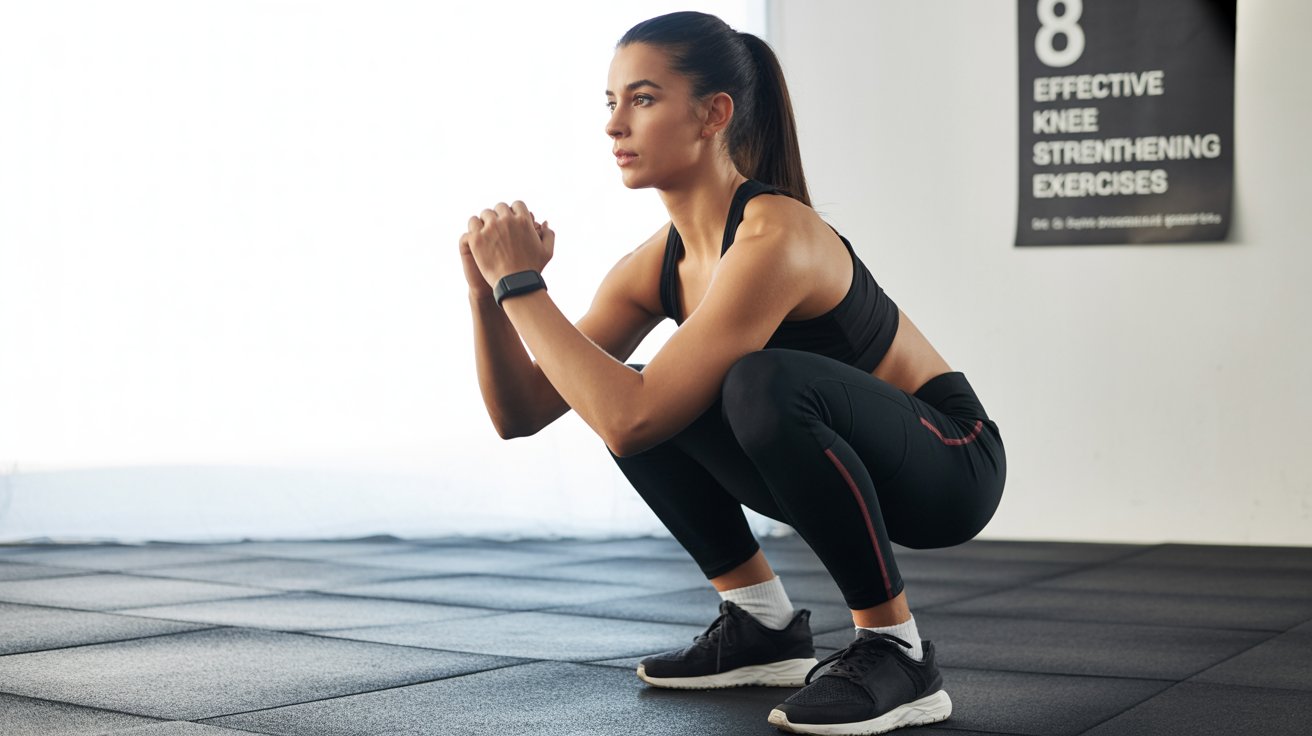
Sitting on the wall?
Wall sits are a classic isometric exercise. They tense your muscles without stretching them or moving your joints. This exercise is especially useful if you’ve recently had an injury or if it prevents you from doing exercises that require more movement. 8 Knee Exercises to Relieve Pain and Stay Strong . If you’re following a routine of 8 effective knee strengthening exercises to relieve pain and prevent future injuries, wall sits should definitely be part of your list.
Here’s how to do wall sits: Sit with your back against a wall and push your feet forward so that your shins are almost vertical when you bend your knees. Continue pressing your back against the wall and come into a sitting position with your knees bent at approximately a 90-degree angle. Hold the position for as long as possible. Once you feel you can no longer hold the position, slowly stand up and return to the standing position. Do three to four sets.
Leg flexion when bending?
Leg curls improve knee health by strengthening the hamstrings—a muscle group located at the back of the thighs.8 effective knee strengthening exercises to relieve pain and prevent future injuries. These muscles play a key role, working with the quadriceps to control knee movement, especially during flexion and extension.
Strengthening the thigh muscles helps For example, with stems. Stronger thigh muscles also help absorb shock and provide better support during activities like running, jumping, or squats. Use a leg curl machine at the gym and follow these steps to complete the exercise:
Lie chest down (on your stomach) on the leg curl machine with the back of your ankles under the padded bar. Keep your core engaged and grip the handles of the machine.
Bend your foot so that your toes point toward your head. This will increase the contraction of your thigh muscles.
In one fluid motion, bring your heels toward your buttocks to lift the bar. Keep your back straight and your core engaged.
Pause briefly when you reach your maximum range of motion, then gently lower the weight, maintaining muscle tension the entire time.
Heupbrug?
The hip bridge exercise targets your glutes, which are important for knee stabilization. The hip bridge specifically targets the gluteus maximus (the largest gluteal muscle) and provides…
It’s important to engage your core muscles during this exercise. Here’s how to do a hip bridge: Lie on the floor with your knees bent and feet flat on the floor.8 effective knee strengthening exercises to relieve pain and prevent future injuries. Press your lower back into the floor, 8 Knee Exercises to Relieve Pain and Stay Strong . engage your core muscles, and push your hips toward the ceiling. Pause when your hips are fully extended and engage your glutes. Hold the position for a few seconds, then lower your back with control. Repeat the exercise a few times.
Weight loss?
A healthy diet and regular exercise are two of the most important components of an effective weight loss strategy.
Abdominal obesity increases the risk of type 2 diabetes, cardiovascular disease, non-alcoholic fatty liver disease, certain cancers, and many other diseases.8 effective knee strengthening exercises to relieve pain and prevent future injuries.
Additionally, reducing the strain on your knees can relieve pain and promote the healing process.
Losing weight requires a lot of exercise, and you may not notice the difference right away. But even if you don’t seem to be losing weight, exercise increases muscle mass, reduces fat, and improves fitness.
What are the best exercises for bad knees?
Your personal goals will determine which exercises you choose. For example, if you have knee pain but your primary goal is to lose weight, your exercise program may look different than that of someone whose primary goal is to relieve knee pain.
In any case, your weekly program should include both cardio and strength training exercises to improve your fitness and overall health.

Exercises to lose weight and improve your fitness?
Most aerobic exercises are effective for weight loss at moderate intensity. However, some high-intensity exercises, such as long-distance jogging or stair climbing, are too strenuous for people with knee problems, no matter how easy they are.
If you have knee problems but want to lose weight, choose light exercises with moderate aerobic intensity. These exercises burn fat and get your heart pumping without putting strain on your knees. It’s a safe, general exercise for people with knee pain. 8 Knee Exercises to Relieve Pain and Stay Strong . Cycling offers aerobic and strengthening benefits. It promotes mobility and works the quadriceps. Trampling also strengthens the hamstrings and glutes.
is included Swimming, jogging, and water aerobics are popular exercises for strengthening knee muscles. The buoyancy of the water allows for low-impact exercise. A 2016 study found that regular swimming reduced joint pain and stiffness associated with osteoarthritis and improved muscle strength and function in middle-aged and older adults.
Exercises to relieve knee pain?
The muscles above, below, and around your knee directly impact knee pain. If the muscles are too weak or too tight, they can’t support your knee properly.
Certain muscles are particularly important, such as the hips, hamstrings, and quadriceps—three muscle groups that provide crucial support to the knees.
Harvard Health Publishing.
If your main goal is to relieve knee pain, choose a combination of low-impact aerobic exercise and strength training. crucial for improving knee function.4Strength training equipment, such as seated knee extensions, helps build muscle. Alternatively, you can also use your own body weight. Leg raises and squats (modified squats) are good knee exercises. prevent the knee and leg muscles from becoming too tense, which can lead to knee pain. Stretches that support the knee and surrounding muscles include quadriceps stretches and standing hamstring stretches. These are low-impact exercises that stretch and strengthen the knee simultaneously.
Aging and natural joint wear?
As we age, our joints undergo a natural, slow deterioration process. The cartilage that cushions the ends of our bones wears away over time. It becomes less able to absorb shock and moves less easily. This can cause the bones to rub against each other, causing pain, swelling, and limited mobility.
Hormonal changes and cartilage degradation?
In both men and women, hormone levels begin to change around the age of 40. In women, declining estrogen levels during menopause and perimenopause can impair joint lubrication and inflammation. These hormonal changes can contribute to cartilage degradation and joint pain, especially in weight-bearing areas such as the hips and knees.
Do you keep track of past injuries?
That old sports injury from college? Or that back pain from sitting on the couch ten years ago? These past traumas don’t just disappear; they can inadvertently lead to joint instability, scar tissue, or premature arthritis that flares up again later in life. Especially without proper rehabilitation, these healed injuries can cause pain well into your forties and beyond.
Building muscle to support aging joints?
As we age, natural muscle loss begins, a condition known as sarcopenia. This gradual loss not only impairs strength but also reduces the support your joints provide. Muscles act as shock absorbers for your joints. Strong muscles absorb much of the pressure that would otherwise be absorbed by cartilage, ligaments, and bones. Without this support, everyday movements—from climbing stairs to carrying groceries—become more strenuous for your joints, leading to pain and stiffness.
How does strength training reduce stress on the joints?
Strength training not only builds visible muscle but also improves joint alignment and stability. Strengthening the quadriceps and glutes relieves pressure on the knees, while strong core muscles reduce strain on the lower back. This means less grinding, inflammation, and wear and tear on the joints.
In addition, strength training improves blood circulation and stimulates the flow of synovial fluid, the natural lubricant in your joints, so you stay flexible and mobile for longer.
Don’t let joint pain dominate your life in your forties and beyond?
Joint pain after 40 is incredibly common, but it doesn’t have to dominate your life. Whether you’re experiencing the first signs of stiffness or suffering from chronic arthritis,What are you doing nowmore important than ever.
Strengthening your body is one of the smartest and most effective ways to prevent further injury, reduce pain, and improve your range of motion in everyday life. From intense cardio and mobility training to targeted strength training, these exercises support your joints without putting stress on them.
But you don’t have to go it alone. Our team treats joint pain with a holistic, minimally invasive approach that eliminates the need for strong medications and unnecessary surgery. We create individualized plans tailored to your current situation and help you live the life you desire.
Baden?
Not only does it improve your mental health, but it can also help you increase your lung capacity and prevent chronic diseases like diabetes and cardiovascular disease. The NHS claims that weekly swimming can reduce the risk of these conditions.
One of the main reasons for swimming is the opportunity to recharge from the outside world. It helps recharge after the constant stimulation of screens. Adequate exercise can also reduce the risk of chronic conditions such as knee and ankle pain. Although intense exercise can make joints more prone to injury, swimming can alleviate these conditions.
According to a study, people with osteoarthritis can significantly reduce their joint pain and stiffness after just a few weeks of regular swimming. Swimming is not only good for physical well-being but can also help strengthen the body’s resilience. It can activate various parts of the body while burning calories.

What ailments can exercise help with?
Knee exercises and stretches can relieve knee pain caused by many conditions, including these three, which commonly affect older women. This condition usually causes a dull, aching ache in the front of the knee that worsens with everyday activities such as squatting, climbing stairs, or standing up after sitting for long periods. The pain is caused by irritation of the cartilage under the kneecap when it is dislocated or misaligned. Exercises can help correct the problems that lead to this irritation. Stretches can loosen tight muscles on the sides of the knee that can pull the kneecap out of place during movement. Strengthening weak hip muscles or stretching tight muscles in the front or back of the legs can also relieve discomfort. If one or both of the cartilage cushions that protect each of your knee joints wear out or break, you may experience pain and a throbbing or locking sensation. Although surgery is sometimes necessary, doctors usually recommend physical therapy first to strengthen the muscles around the knee, thereby reducing pressure on the joint and relieving discomfort.
Quadriceps activation?
A good place to start is by activating the quadriceps, the large muscle on the front of the thigh. It’s important to activate these muscles before placing any strain on your sore knee joint.
Practice activating your quadriceps by pressing the back of your knee into the mat. You can make this easier by placing a rolled-up towel under your knee.
Activate your quadriceps by holding them for 5 seconds and then relaxing. Repeat 10 times per leg, with a short 5-second rest in between.
Sitting and standing?
You can do this exercise anywhere you have a bench or chair. I love this exercise because we do it every day, at our desks or even on the couch. While seated, this exercise works various muscle groups like the quadriceps, hamstrings, and glutes. It also engages the core muscles to stabilize the body.
Sit slowly on a bench or chair with your arms at your sides and stand up while sitting for stability. Then slowly stand up, engaging your glutes. It’s very important to focus on sitting as you lower yourself.slowThis allows you to focus better on the muscles you’re training. You also increase your risk of injury by performing the exercise as quickly as possible. Vary the exercise by choosing a slightly higher bench or chair so you don’t have to go as deep. Do 3 sets of 15 repetitions of this exercise.